Creative Technologies | BA Study Plan
1st Semester
Win-Sem
2nd Semester
Sum-Sem
3rd Semester
Win-Sem
4th Semester
Sum-Sem
5th Semester
Win-Sem
6th Semester
Sum-Sem
Design-based Courses
Computer Science-based Courses
Electrical Engineering-based Courses
Project-based Courses
Theory-based Courses
Guest Lecturer
Block Seminar
Guest Lecturer
Block Seminar
Design & Innovation
Universal Design Principles
Prof. Felix Beck
This module introduces fundamental methods and principles of creative design. The focus is on the structured design process – from problem definition through idea generation to the development and presentation of initial concepts. Students learn creativity methods such as Design Thinking and apply them to practice-oriented tasks. The Universal Principles of Design serve as a theoretical framework for evaluating and refining design ideas. The module is supplemented by practical exercises in sketching, visualisation and concept development.
Keywords
Design Process, Creativity Methods, Design Thinking, Concept Development, Sketching, Idea Generation, Prototyping, User-Centredness, Design Principles, Innovation
Additional notes:
…

IXD Fundamentals
Fundamentals of Digital Media
Prof. Felix Beck
This module covers the design and technical fundamentals of interactive digital media. Students engage with key aspects of interaction design – including user guidance, feedback, interaction patterns and visual communication. The focus is on conceiving and implementing digital interfaces with regard to aesthetics, functionality and user needs. Complementary design elements such as typography, colour and layout in the digital space are explored and tested in small projects.
Keywords
Interaction Design, Digital Media, Interface Design, Usability, User Guidance, Feedback Systems, Visual Communication, Typography, Colour Design, Prototyping
Additional notes:
…
Media Technology and Media Formats
Fundamentals of Digital Audio, Video and Image Systems
Lecturer: Guest Lecturer (est. Adriaan Bernstein), Prof. Felix Beck (Module Coordinator)
This module develops a fundamental technical understanding of digital media formats and their processing. Students learn about the structure, properties and application areas of audio, video, image and 3D formats. Topics such as encoding, compression, file formats and transmission standards are covered alongside relevant technologies for media capture, editing and output. The aim is to build a solid understanding of the technical conditions of media-based applications – as a foundation for creative and technically sound media design.
Keywords
Media Technology, Media Formats, Encoding, Compression, Audio Formats, Video Formats, Image Formats, 3D Data, Signal Processing, Media Production
Additional notes:
…
Coding Essentials
Introduction to Programming
Prof. Dr. Darius Malysiak
This module introduces fundamental programming skills as a creative and analytical practice. Students learn about programme structure, control structures, data structures and the use of functions. The focus is on an accessible, practice-oriented entry into programming – with the goal of being able to implement one's own ideas digitally. Beyond writing code, the module addresses basic algorithmic thinking, debugging and an initial understanding of code as a tool for designing interactive systems.
Programming, Algorithms, Control Structures, Data Structures, Functions, Debugging, Syntax, Logic, Interactivity, Creative Coding
Additional notes:
…
Grundlagen BWL
Business Administration Fundamentals
Lecturers from the IBL
This module conveys key business fundamentals in the context of developing, implementing and marketing creative and technological projects. Core areas of business administration are covered, including types of companies, cost accounting, financing, marketing and project costing. The focus is on understanding economic relationships and decision-making processes within organisations – particularly in the context of digital products, services and start-ups. Students learn to translate creative ideas into viable concepts and to plan and evaluate their implementation from a business perspective.
Keywords
Business Administration, Financing, Marketing, Cost Accounting, Business Models, Project Costing, Types of Companies, Economic Viability, Entrepreneurship, Innovation Management
Additional notes:
…
UI Fundamentals
User Interface Design with Focus on Usability
Prof. Felix Beck
This module focuses on the design and evaluation of digital user interfaces with particular emphasis on usability and user experience. Students learn how to structure, visually design and functionally implement digital interfaces. Key topics include information architecture, visual hierarchies, interaction patterns and responsive design. Usability evaluation methods are also covered to enable systematic analysis and improvement of digital applications. Practical projects reinforce the connection between design, technology and the user perspective.
Keywords
User Interfaces, Usability, Interface Design, Information Architecture, Interaction Patterns, Responsive Design, Wireframes, User Experience, Usability Testing, Visual Hierarchy
Additional notes:
…
Make!
From Concept to Fabrication
Lecturer: Guest Lecturer (est. Adriaan Bernstein), Prof. Felix Beck (Module Coordinator)
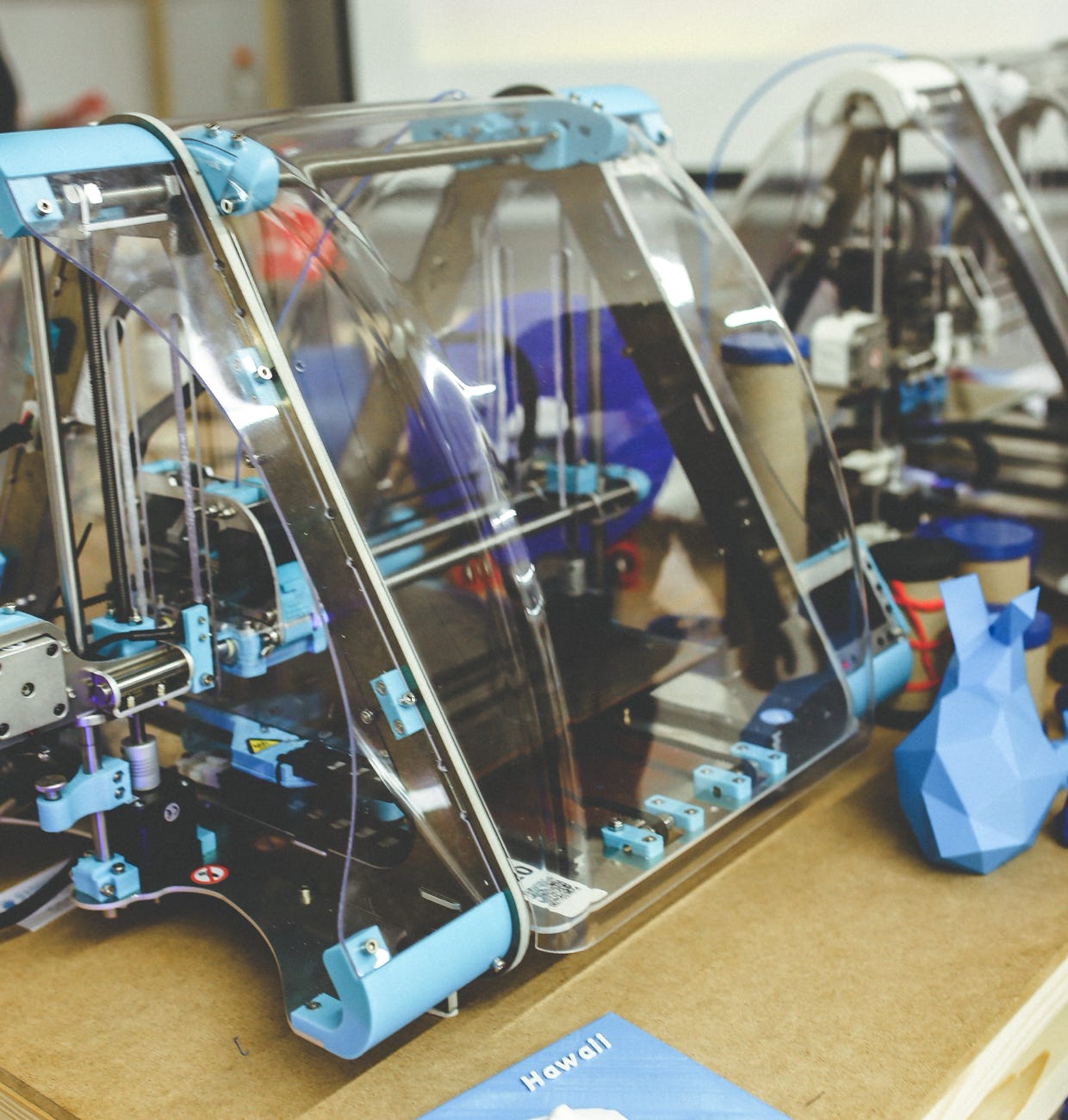
This module connects creative design with digital and physical production. Students work through the entire process from sketch to 2D/3D design through to prototype fabrication using digital manufacturing technologies. Topics include CAD fundamentals, rapid prototyping, additive and subtractive manufacturing methods, and materials and tooling. The emphasis is on practical work in the workshop and laboratory – with the aim of iteratively developing, testing and physically realising one's own designs.
Keywords
Prototyping, CAD, 3D Printing, CNC, Laser Cutting, Digital Fabrication, Rapid Prototyping, Workshop Practice, Manufacturing, Design-to-Production
Additional notes:
…
Making Things Talk
Einführung in Physical Computing
Prof. Dr. Christian Störte
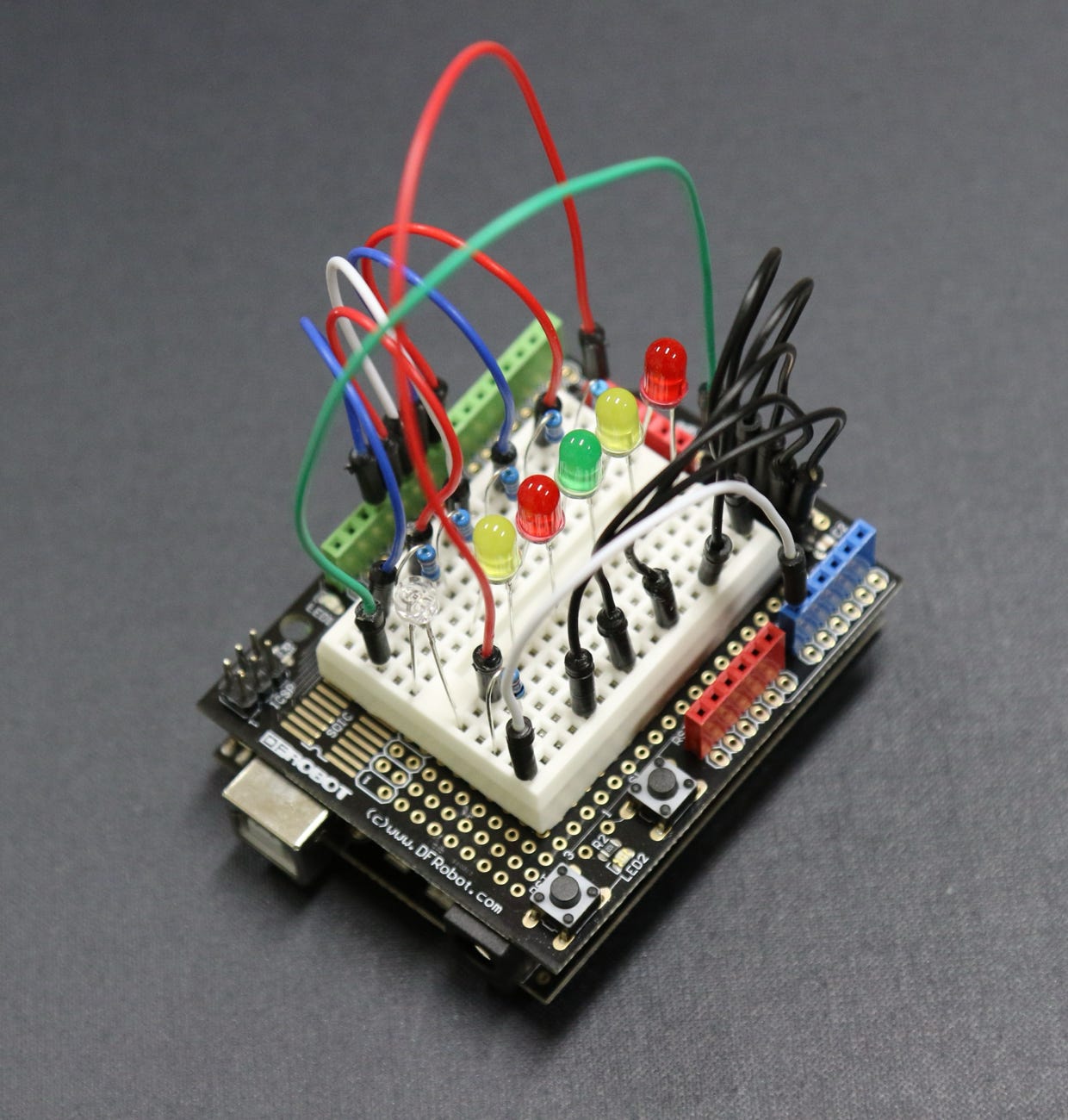
This module offers a practice-oriented introduction to the fundamentals of electronics and the world of embedded systems. Students learn key electrical concepts such as current, voltage, resistance and basic circuits, and apply them directly using microcontrollers. Sensors, actuators and digital components are covered alongside communication between hardware components via protocols such as I²C and SPI. The focus is on understanding how electronic systems capture, process and respond to data – and how to make them communicate through code, power and creativity.
Keywords
Electronics, Microcontrollers, Sensors, Actuators, Embedded Systems, Arduino, I²C/SPI/UART, PWM, Power Supply, Hardware Communication
Additional notes:
…

Vectors, Motion & Models
Maths for Media Systems
Prof. Dr Götz Kappen
This module covers the mathematical foundations for designing and simulating dynamic digital systems. The focus is on vector calculus, linear algebra and fundamental concepts of physics relevant to animation, interaction, computer graphics and media programming. Students learn to model motion, represent forces and translate mathematical models into interactive systems. Applications are practice-oriented – e.g. small simulations, creative visualisations or dynamic interfaces.
Keywords
Vectors, Linear Algebra, Motion, Forces, Transformations, Simulation, Mathematics for Design, Physics in Media, Models, Interactive Systems
Additional notes:
Specialised mathematics must be offered within the context of the respective courses if required!
Computational Thinking
Fundamental Concepts of Computer Science
Prof. Dr. Moritz Sinn, Prof. Dr. Kathrin Ungru
This module introduces students to the core principles of Computational Thinking. The focus is on developing algorithmic problem-solving strategies for domain-specific challenges. Fundamental data structures, methods for runtime and memory analysis, and concepts of computability and complexity are covered. The emphasis is on practical application: students learn how to evaluate and selectively apply different solution approaches. Small-group exercises also foster analytical thinking, abstraction skills and cooperative working – an important foundation for creative work with digital technologies.
Keywords
Algorithms, Data Structures, Runtime Analysis, Memory Complexity, Computability, Complexity Theory, Heuristic Methods, Abstraction, Applications, Teamwork
Additional notes:
The study plan must be coordinated with the study plan of the "Digital Engineering" programme so that the course is offered only once for both programmes.
English for Science and Engineering
Technical Communication in Study and Profession
Harald Ermen M.A., Dr. Andreas Hövener M.A., Julia Ott M.A.
This module develops language skills for communication in technical and creative professional fields. Students expand their vocabulary and expressive ability in English, focusing on topics such as project work, presentations, documentation, communication in international teams, and understanding and producing technical texts. Through practice-oriented scenarios and subject-specific content, they learn to confidently handle English-language sources, tools and conversation situations in the workplace.
Keywords
Technical English, Technical Vocabulary, Communication, Presentation, Teamwork, Documentation, Project Work, International Collaboration, Technical Texts, Professional English
Additional notes:
…
Creative Technologies Project (3rd, 4th and 5th Semester)
Various Projects
Prof. Dr. Kathrin Ungru, Prof. Dr. Sven Bodenburg
This project module develops the ability to independently and collaboratively address complex, interdisciplinary problems. Students apply their technical, design and theoretical knowledge to practice-oriented tasks from the fields of technology, design and society. The structured process – Discover! (analysis and contextual research), Ideate! (concept development), Make! (prototyping) and Expose! (documentation and presentation) – supports methodical working and problem-solving thinking. Beyond specialist deepening, the focus is on communication, teamwork and presentation skills. Students learn to convey ideas professionally, justify decisions and take responsibility within a project context. Through reflection on their own process, they develop independence, flexibility and the ability to transfer knowledge to new situations.
Keywords
Design Process, Interdisciplinarity, Teamwork, Prototyping, Concept Development, Creative Problem Solving, Societal Change, Sustainability, Technology & Culture, Responsibility, Future Competence, Reflection, Communication & Presentation, Project Management, Independence, Transfer Competence, Digital Tools, Human-Centred Design, Systems Thinking, Innovation
Additional notes:
Culture & Clients, Future Trends & Global Responsibility
Internship, Research or Semester Abroad
…
Prof. Dipl. Des. Felix Beck
Das 6th Semester ist die Chance, Creative Technologies einmal „in echt“ zu leben – nicht als Pflichtpraktikum nach Schema F, sondern als Format, das zu unterschiedlichen Profilen passt. Ob im Unternehmen, im Forschungslabor oder an einer Partnerhochschule im Ausland:
Im Mittelpunkt steht, das bisher Gelernte in einem neuen Umfeld anzuwenden, zu vertiefen und sichtbar zu machen. Wer Richtung Industrie und Produktentwicklung denkt, sammelt Praxiserfahrung, versteht Abläufe, Anforderungen und Teamdynamiken und liefert Ergebnisse, die im Portfolio zählen. Wer neugierig auf R&D ist, kann im Forschungssemester an aktuellen Themen mitarbeiten, methodisch sauber arbeiten, testen, dokumentieren und bekommt oft genau die Grundlage für eine starke Bachelorarbeit oder einen späteren Master. Und wer international denken will, nutzt das Auslandssemester, erweitert Perspektiven, Sprache und Netzwerk – und bringt neue
methods, tools and ways of thinking to the programme. The key point: it is not the location that defines the value, but the competence gained. That is why there are clear guidelines (goals, supervision, documentation, reflection) but maximum freedom in choosing the appropriate path. The result: greater motivation, better matching, stronger profiles – and a semester that opens doors.
Additional notes:
See also module description CT_601
BA-Arbeit
Incl. Colloquium
n.n.
In the final module of the Creative Technologies programme, students address a self-chosen, innovative question at the intersection of technology, design and society. The bachelor's thesis can be research-oriented, practice-based or design-conceptual in nature, and should reflect the individual study focus and the competences acquired during the programme.
In the colloquium, students present their results in an interdisciplinary setting and reflect on methodological, theoretical and design decisions. The work can be carried out individually or in a team (with individually delineated contributions). Supervision is provided by lecturers from one or more participating subject areas.
Keywords
Bachelor's Thesis, Interdisciplinary Research Question, Creative Research, Technical and Design Implementation, Individual Focus, Research- or Practice-Oriented, Documentation and Presentation, Colloquium, Reflection, Independent Work, Scholarly and Design-Based Work
Additional notes:
…
Computational Design
Generative Design
Prof. Felix Beck
This module introduces fundamental concepts of algorithmically-supported design. Students develop design systems in which form and structure are generated through code and rules. The focus is on principles of generative design, parametric design and the creative use of algorithms for visual exploration. Using appropriate programming tools, interactive, data-driven or systemic designs are realised that innovatively connect design and technology.
Keywords
Generative Design, Parametric Design, Algorithmic Form Finding, Creative Programming, Visual Systems, Data Visualisation, Interaction, Design with Rules, p5.js, Design through Code
Additional notes:
…
Applied AI
Angewandte Künstliche Intelligenz (gleicher Kurs Dig. Eng.)
Prof. Dr. Jürgen Te Vrugt
In addition to technical fundamentals, ethical, societal and design questions surrounding the use of AI are addressed. The aim is to critically understand the possibilities of current AI systems and to integrate them responsibly into one's own projects.
This module offers a practice-oriented introduction to methods and tools of Artificial Intelligence (AI) with a particular focus on creative, technical and interactive applications. Students learn fundamental concepts of machine learning and independently implement simple AI models – e.g. for image recognition, text processing or interactive systems.
A central component of the course is the exploration and testing of current AI-based tools and applications: these include AI-assisted systems for text and code generation as well as tools for image, audio and video production and editing. Students reflect on the potentials and challenges of these technologies and develop their own creative application ideas.
Keywords
Artificial Intelligence, Machine Learning, Creative AI Applications, Generative AI, Text and Code Generation, AI in Image, Film and Audio, Image Recognition, Natural Language Processing, No-Code/Low-Code Tools, Open-Source Frameworks, Critical Reflection, Ethical Questions, Experimental Prototypes
Angewandte Webentwicklung für kreative Technologien
Frameworks und Systeme in modernen Webanwendungen
Prof. Dr. Philipp Kather
In this module, students learn to interconnect different hardware and software platforms and to implement interactive systems both functionally and in terms of design. Using practice-oriented scenarios, sensors, microcontrollers, mobile devices, desktop applications and external interfaces are connected to one another.
Protocols such as OSC, MIDI, WebSockets and Serial Communication are used alongside middleware environments such as Max/MSP, TouchDesigner, vvvv, openFrameworks, Processing or Unity. Topics including synchronisation, clocking, routing and platform differences (Windows, macOS, Mobile, Embedded) are specifically addressed. The goal is the creative integration of distributed systems into coherent, interactive applications.
Keywords
Cross-Platform Development, Middleware (Max/MSP, TouchDesigner etc.), Communication Protocols (OSC, MIDI…), Synchronisation & Clocking, Platform Differences, System Integration, Sensors & Actuators, Multimedia Real-Time Applications
Additional notes:
…
Computergrafik
…
Prof. Dr. Kathrin Ungu
This module covers fundamental concepts of computer-aided representation and modelling of visual content. Students learn the mathematical and algorithmic foundations for generating and transforming 2D and 3D graphics. Topics include rendering techniques, camera models, geometry and lighting. Knowledge is applied in students' own visual scenes through practical work.
Keywords
Rendering, 3D Modelling, Transformations, Camera Models, Geometry, Lighting, Shaders, Graphics Cards, Ray Tracing, OpenGL
Additional notes:
…
Making Things Move
Motion, Actuation and Physical Interaction
Prof. Dr. Christian Störte
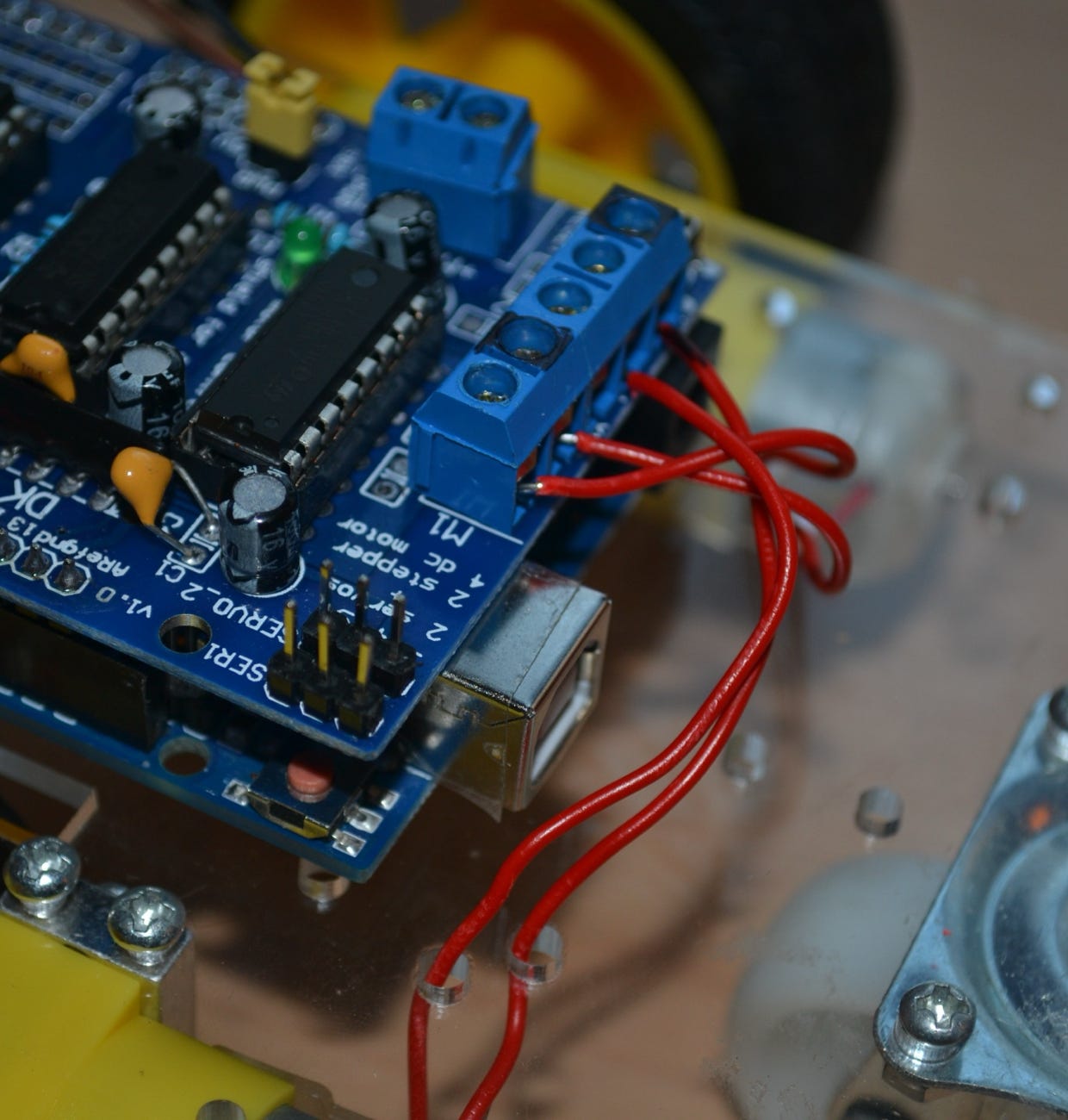
In this foundational module, students acquire key knowledge of mechanics, actuation and drive technology for interactive systems. They learn physical principles such as lever action, force transmission and kinematics, and apply these practically in motion systems. Particular focus is placed on controlling electric motors, integrating simple sensor feedback loops and interfacing via microcontrollers.
Typical applications include kinetic installations, servo controls or mechanical components such as grippers or pivot arms. The module thereby provides the foundation for building more complex mechatronic systems in later stages of the programme.
Keywords
Fundamentals of Mechanics and Kinematics, Actuation, Electric Motors and Control, Simple Controllers (PID), Sensor Integration, Microcontroller Interface, Linear Motion, Torque, Mechanical Components, Introduction to Mechatronics, Motion Prototypes
Elective Module 1
Elective Module: Computer Science and Related Disciplines
Various Professors…
This module gives students the opportunity to selectively expand their profile and deepen individual areas of interest. Beyond content expansion, the elective module also serves to explore new or previously unfamiliar subject areas. It supports individual specialisations that align with personal study paths or future professional fields.
Courses from the computer science module catalogue and adjacent disciplines may be selected, provided they are thematically compatible. The module is open to newly emerging subject areas, interdisciplinary formats and experimental approaches, allowing flexible responses to current technological or societal developments.
Keywords
CS Specialisation, Individual Profile Building, Computer Science Modules, Adjacent Disciplines, New Technologies, AI and Data Processing, Software Development, Human-Computer Interaction, Flexible Module Selection, Interdisciplinary Openness, Future-Oriented Topics
Additional notes:
…
Elective Module 2
Elective Module: Electrical Engineering and Related Disciplines
Various Professors…
This module gives students the opportunity to selectively expand their profile and deepen individual areas of interest. Beyond content expansion, the elective module also serves to explore new or previously unfamiliar subject areas. It supports individual specialisations that align with personal study paths or future professional fields.
Courses from the computer science module catalogue and adjacent disciplines may be selected, provided they are thematically compatible. The module is open to newly emerging subject areas, interdisciplinary formats and experimental approaches, allowing flexible responses to current technological or societal developments.
Keywords
Technical Specialisation, Individual Profile Building, Computer Science Modules, Adjacent Disciplines, New Technologies, AI and Data Processing, Software Development, Human-Computer Interaction, Flexible Module Selection, Interdisciplinary Openness, Future-Oriented Topics
Additional notes:
…
Einführung in die Webentwicklung
Structure and Interaction in the Web (www1)
Prof. Dr. Patrick Stalljohann
The module centres on developing interactive web applications with current frontend and backend technologies. Students acquire practical knowledge of HTML, CSS, JavaScript and modern frameworks, and learn how dynamic content, API integrations and server-side functionalities are realised. The focus is on structured, maintainable code and the interplay of design and functionality in web-based projects.
Keywords
HTML, CSS, JavaScript, Frontend, Backend, Frameworks, Webdesign, API, Responsive Design, Full-Stack
Additional notes:
…
Mensch-Computer Interaktion
…
Prof. Dr. Gernot Bauer
This module covers the design and analysis of interactive systems with the goal of developing user-friendly and accessible digital applications. Students learn about the fundamentals of perception, usability principles and methods of user-centred design. The focus is on prototyping, evaluation and iterative improvement of interfaces. The module is complemented by practical exercises and projects in which interactions are designed, implemented and tested.
Keywords
Usability, Interface Design, Prototyping, Evaluation, User-Centredness, Accessibility, Interaction Design, Usability Testing, Design Principles, Human-Technology Systems
Additional notes:
…
Portfolio
Reflection, Documentation and Presentation of Projects
Prof. Felix Beck
This module develops foundational design and technical competences for building a professional online portfolio. Students design their own website to present projects, ideas and areas of focus created during their studies – oriented towards individual professional goals. They learn to select content purposefully, prioritise meaningfully and prepare it in a media-appropriate manner. The course connects visual design (e.g. layout, typography, visual language) with aspects of web development (e.g. responsive design, CMS, hosting), drawing on the content of the web development course in the 4th semester and applying it in practice. The aim is to develop a confident, reflective and career-ready design-technical identity for job applications, project acquisition or artistic-research endeavours.
Keywords
Online Portfolio, Individual Profile Building, Design and Technical Implementation, Curating and Prioritising Projects, Web Technologies and CMS, Responsive Design, Visual Design, Strategic Self-Presentation, Connection with Web Development (4th Semester), Application and Presentation Skills
Additional notes:
…
Computer-Aided Circuit Design
Analog-Digital Circuit Design
Sven Bodenburg, Dirk Fischer
This module covers the fundamental principles for designing and analysing analogue and digital circuits. Building on the courses Making Things Talk (sensors & communication) and Making Things Move (actuation & control), it deepens understanding of electrical signal processing and the functional structure of electronic systems – from signal acquisition to the control of technical components.
Keywords
Analogue Technology, Digital Technology, Signal Processing, Operational Amplifiers, Logic Components, Sensors, Actuators, AD/DA Conversion, Microcontrollers, System Integration, Electronics Development, Circuit Diagrams, Functional Safety, Prototyping, Electrical Engineering Fundamentals, Laboratory Experiments, Communication Interfaces, Control Engineering, Embedded Systems, Interdisciplinary Work
Software Engineering
…
Prof. Dr. Gernot Bauer
This module introduces fundamental methods for the systematic development of software systems in an engineering context. Students learn key techniques such as object-oriented analysis, agile development processes and modern software architectures. The focus is on the entire software lifecycle – from requirements gathering through design and implementation to quality assurance. Practical exercises and projects develop both technical competences and skills in teamwork, communication and methodical working.
Keywords
Object Orientation, Agile Methods, Software Architecture, Requirements Analysis, Design Patterns, Implementation, Testing Methods, Version Control, Project Work, Team Communication
Additional notes:
…